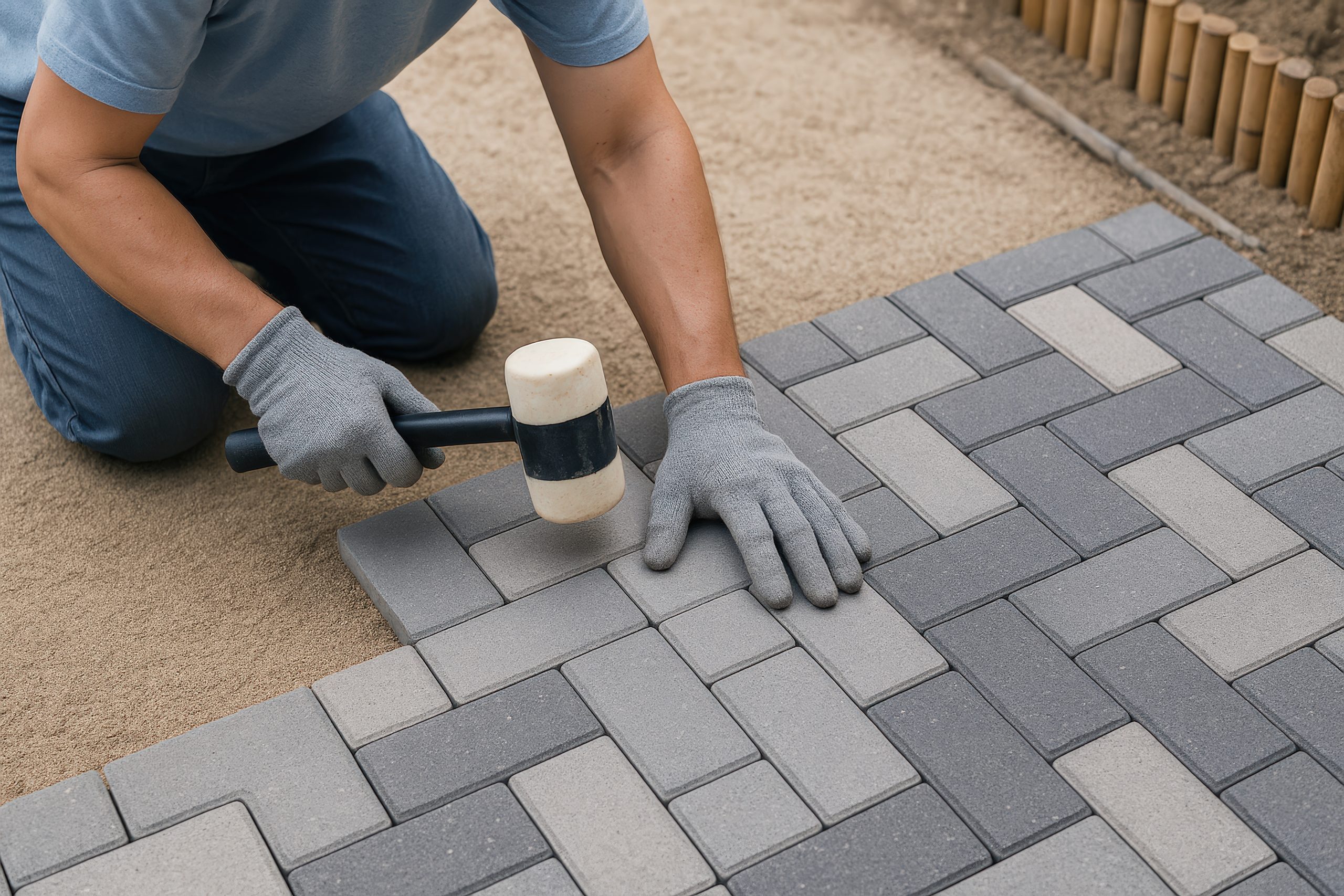
Although it’s possible to lay pavers directly on dirt, it could lead to poor structure, drainage issues, and shifting or sinking. To create a more stable, level surface, use a proper base such as gravel. Below are some things to consider when laying pavers directly on dirt.
Faster Installation
Homeowners often want to bypass time-consuming, labor-intensive steps, which is why they lay pavers directly on dirt when creating simple pathways and areas within their landscaping. They want to skip excessive digging to accommodate robust layers, eliminate the need to add and compact base materials, and bypass the requirement to add and level a sand setting bed.
By eliminating these steps, you can lay pavers more quickly. However, a faster installation could result in long-term challenges that cost you significant time. For example, the quick installation may seem great until uneven settling occurs later, as traffic and weather changes can cause soil shifts. Depending on the extent of the setbacks, these uneven settlings could require lifting and relaying the pavers or a full landscape replacement.
Reduced Costs
Site preparation, equipment, and labor are expenses that can be reduced significantly or eliminated when laying pavers directly over dirt instead of performing an installation with a proper base. As a result, some homeowners are more open to taking advantage of the reduced costs during the initial process. However, placing the pavers on an unstable base such as dirt can lead to greater natural shifting, expansion, and contraction.
Although laying pavers on dirt can eliminate the need for installing several inches of proper base, the pavers are more likely to become uneven, sink, or separate within a short time, requiring additional costs for repairs or even reinstallation. Therefore, these immediate cuts may not be as cost-efficient in the long run.
Temporary vs. Permanent
Permanent options include properly engineered foundations made of sand and gravel, and unlike pavers laid directly over dirt, sand and gravel can ensure stability and longevity, making them the best selection.
Laying pavers over dirt is more temporary due to the instability and dynamic base material that can lead to poor drainage, excessive weed growth, and shifting. This is not only a temporary fix but can also lead to more problems in the long run, making permanent, durable paver installation the best choice.
Areas and Steps to Avoid
The quick installation, low maintenance requirements, and versatility of laying pavers directly over dirt are sometimes what homeowners seek, even if it is a temporary solution. Instead, you should opt for ways to increase durability, strength, and versatility, improve drainage, and boost property appeal and value. This includes using edge restraints and applying the correct joint sand application. Properly creating a slope can reduce the risk of improper drainage.
Always have the area excavated and leveled properly, and avoid placing pavers directly over dirt in heavily used spots. A high-traffic area won’t hold up well with this option. A layer of sand is also necessary, along with careful joint filing. Whether you’re planning a simple walkway or a comprehensive landscaping design in San Diego, consulting a professional landscaper can provide the best long-lasting solutions as well as other tips about areas and steps to avoid. If you’re planning to enhance your outdoor space with a durable and beautiful hardscape, trust the experts at GAIA Builders & Pools. Our team specializes in high-quality paver installation San Diego homeowners have trusted for more than two decades, ensuring every project is built to last with precision and style. Whether you’re updating your patio, walkway, or pool deck, we combine craftsmanship and creativity to deliver stunning results that elevate your property. Give our team a call today to learn more about our professional paver installation services and start transforming your landscape into a space you’ll love.