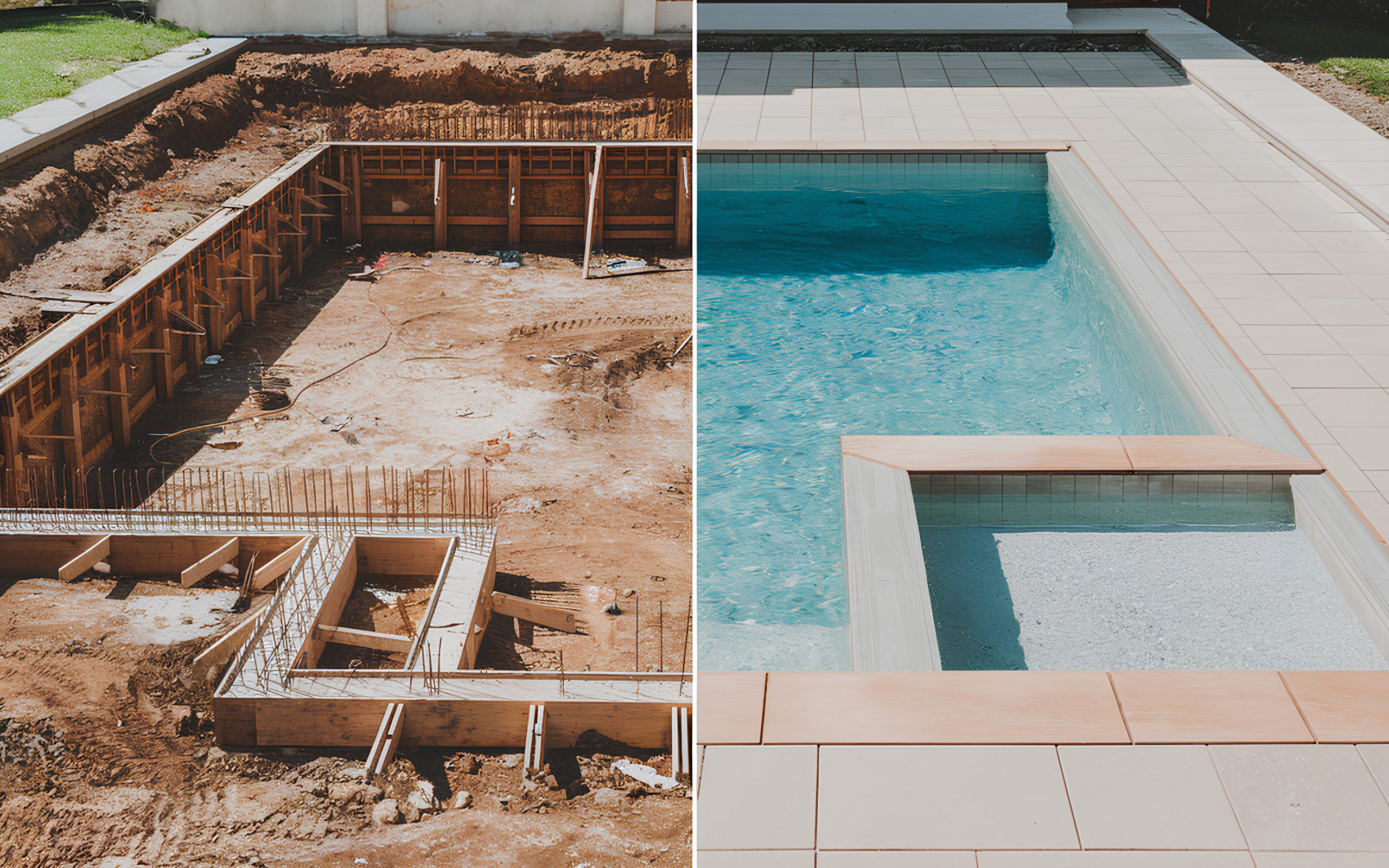
Engineers build new swimming pools by carefully considering what homeowners prefer regarding their choice of materials. Gunite, fiberglass, and vinyl all provide different benefits and require varying levels of care. Taking a deep dive into what each material involves helps you choose which one works best for building your swimming pool.
What’s Involved with Building and Caring for a Gunite Pool?
Gunite is a special type of concrete pool builders use to create custom designs. During the construction process, contractors build a steel rebar frame the concrete is then applied over. Once this part is finished, you’ll have a structural shell the pool builders can then cover with plaster, tile, pebble, or quartz. With proper construction techniques and regular maintenance, a gunite pool can last for more than 50 years.
How Do Fiberglass Pools Work?
Fiberglass swimming pools are made from premanufactured shells pool builders can quickly install. While you won’t have the option of completely customizing the design, you’ll find you have a wide variety of colors, shapes, and integrated features to choose from. Fiberglass pools are nonporous, which means you can enjoy easier maintenance compared to gunite. Fiberglass swimming pools can still last for decades, but you might need to refinish the gelcoat surface over time.
How Does Pool Vinyl Stand Up to the Test of Time?
Vinyl liners for swimming pools are an option many homeowners choose to fit their budgets and need for swift installation. Vinyl swimming pools serve as a middle ground for customization options, since you’ll be able to have more freedom with the design compared to fiberglass. However, vinyl liners typically only last for five to 12 years before they need replacement.
What’s the True Cost of Ownership for Each Pool Type?
As a general rule, gunite pools have a higher initial installation cost that’s often offset by their exceptional longevity and design flexibility, though periodic resurfacing adds to long-term expenses. Meanwhile, fiberglass is often the strongest candidate for giving homeowners a budget-friendly option that doesn’t require a lot of maintenance over the years. Vinyl swimming pools tend to look like the best financial option for families, but needing to replace the liner every 10 years or so can increase how much you pay over time. Striking the right balance is easier when you discuss your preferences regarding cost, customization, and maintenance with a pool builder during a consultation. Any reputable pool company San Diego has to offer can help you strike the right balance by discussing your preferences regarding cost, customization, and maintenance during a consultation.
Whether you’re leaning toward gunite, fiberglass, or vinyl, GAIA Builders & Pools can help you choose the pool shell that fits your budget, design goals, and maintenance preferences. As the landscaping contractor San Diego homeowners rely on for complete backyard transformations, our team handles everything from pool design and construction to the surrounding hardscape and landscaping. Contact GAIA Builders & Pools today to schedule a consultation and start planning the backyard retreat your family will enjoy for decades.
Frequently Asked Questions
Do engineers consider gunite swimming pools to be stronger than fiberglass ones?
+
No. Gunite is made from reinforced concrete, and fiberglass is designed as a single-piece shell. The soil conditions, swimming pool design, and installation all play a role in how strong both types of swimming pools are after their construction.
How long will a vinyl pool last?
+
The structure of a vinyl pool can last for 20 years or more. But the liner itself will need replacement sooner.
Do you need to resurface gunite swimming pools?
+
Yes, most pool builders recommend resurfacing gunite swimming pools every 10 to 15 years.
Which type of pool costs less to maintain?
+
Fiberglass is known for being easy to maintain due to its nonporous structure. But all pools need routine cleaning and other forms of maintenance to reach the long end of their life spans.